Wrapped in a Field of Wildflowers: An Anniversary Coverlet Inspired by Early American Weavers

For our 43rd wedding anniversary, a coverlet became a story in cloth.
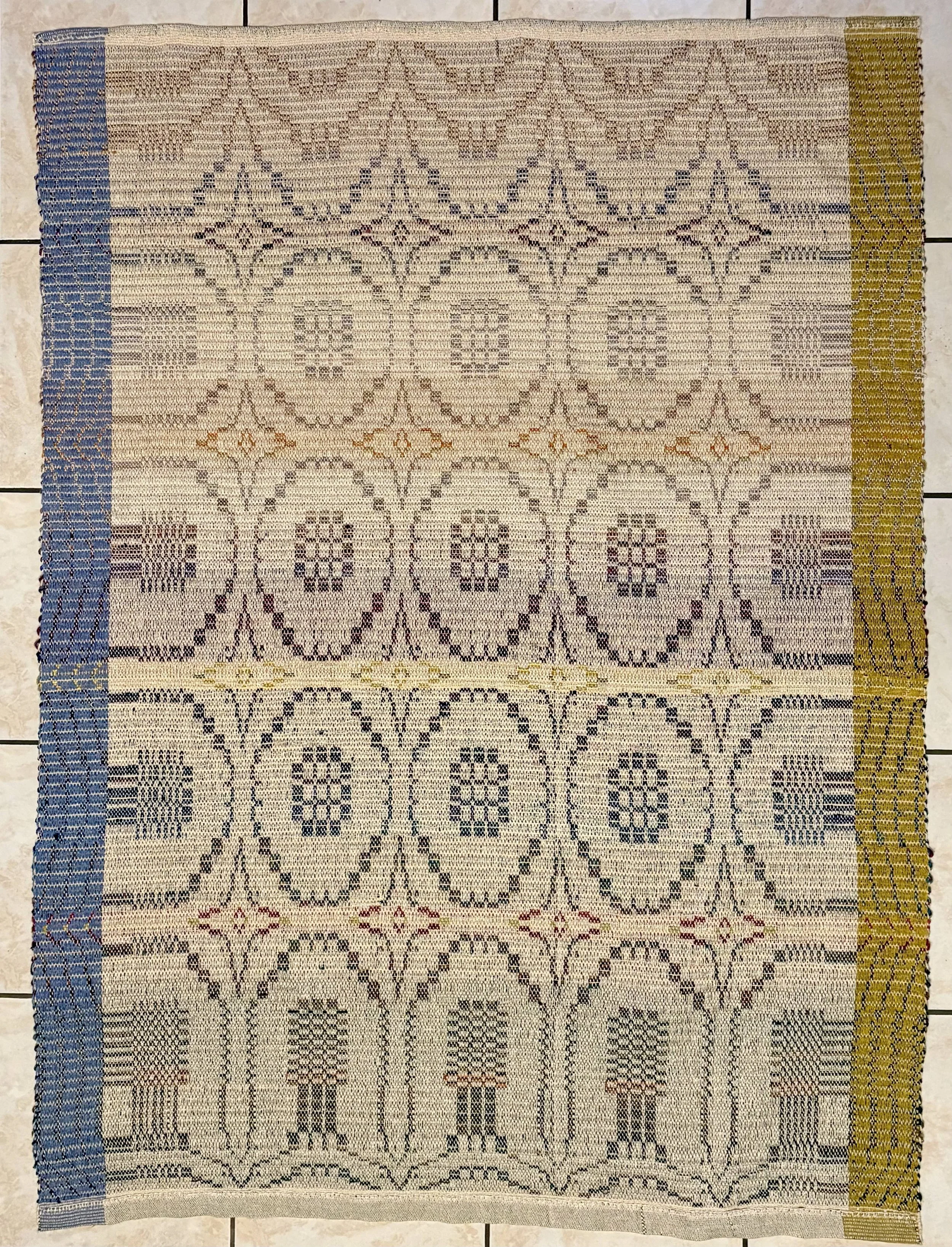
For our 43rd wedding anniversary, I wanted to create a gift that would hold our years together in thread and color. The answer came in the form of a handwoven coverlet inspired by 18th-century American designs shared by Carol Strickler in her 1987 publication American Woven Coverlets. The pattern that captured my imagination was the “Snowball in Ring and Pine Tree” double-weave coverlet.
Like our 43 years of marriage, this too became a shared creative endeavor—an exploration of complexity, perseverance, and sheer determination. Alan and I approached each challenge with our usual curiosity and optimism. Together we studied the weave structure, the treadling draft, and the ergonomics of my 12-shaft, 45” Nilart LeClerc loom (circa 1960s). We purchased this loom in 2015 after it had served the Weavers’ Guild of Greater Cincinnati for decades—so it already carried its own weaving history before arriving in my studio.
We found an adaptation of the coverlet draft on page 154 of A Weaver’s Book of 8-Shaft Patterns (1991), edited by Carol Strickler. The snowball and pine tree pattern offered a workable version of the historic design from American Woven Coverlets. The moment we saw it, we knew: this would be the coverlet for our anniversary.
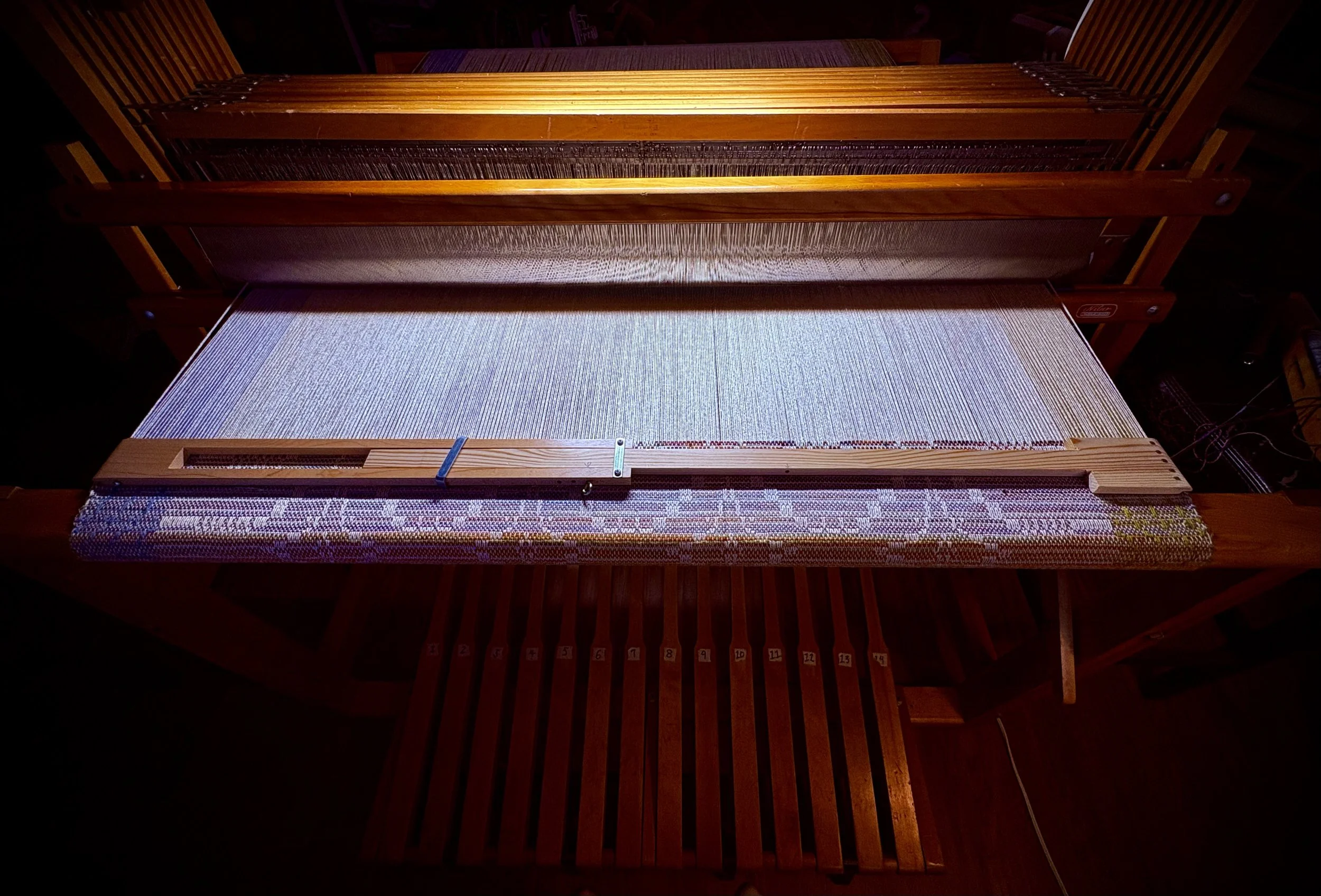
If you read my blog, It’s as Easy as Your A, B, C’s, you may remember that I began threading the loom on February 13th. The draft calls for eight shafts and fourteen treadles. After 1,080 warp threads were sleyed and the heddles threaded, balancing the shafts so each treadle would lift evenly and produce a clean shed was its own puzzle. I lost count of how many times I crawled under the loom adjusting ties.
Plain weave was unexpectedly difficult.
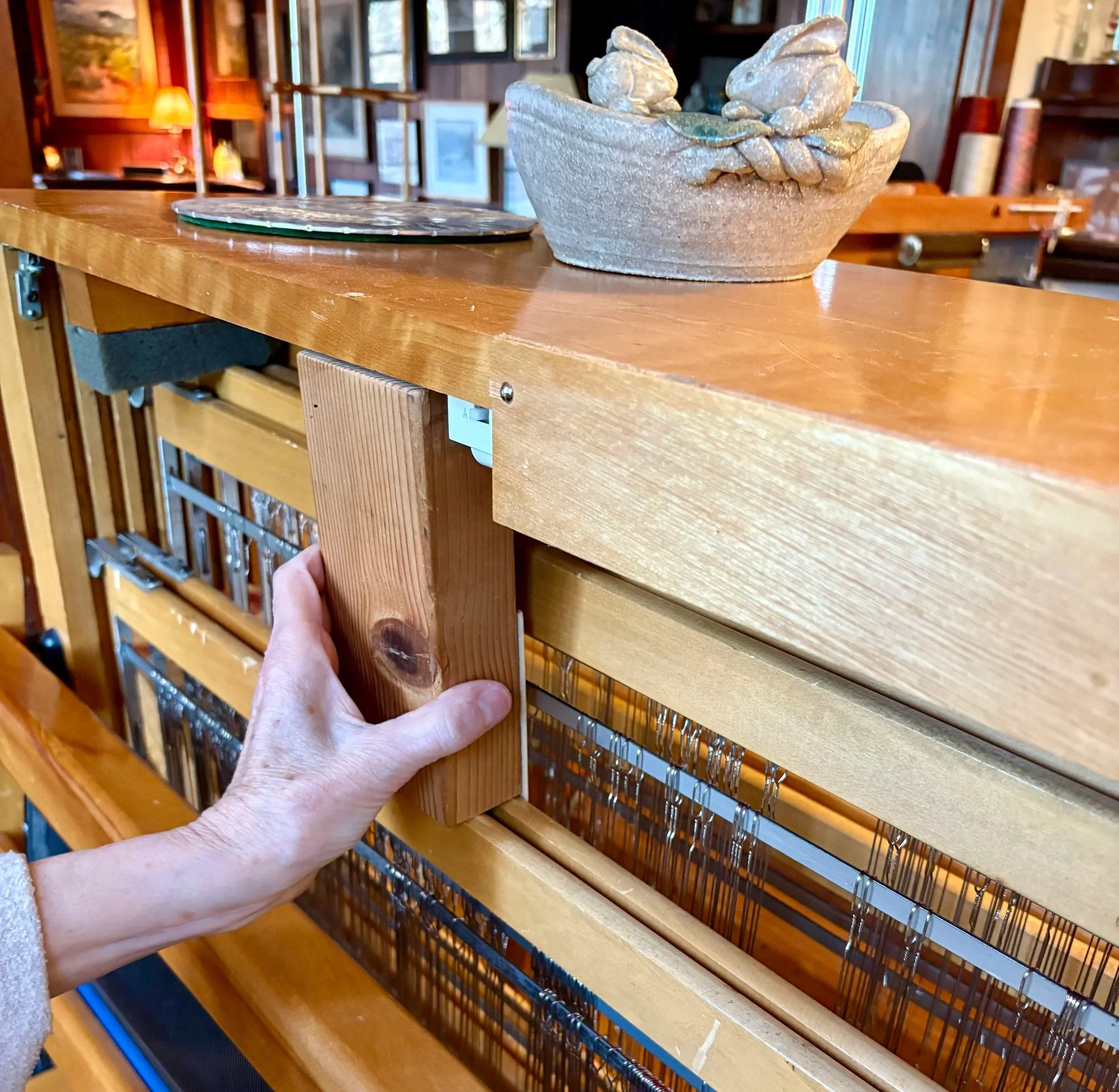
Shafts 1 and 2 would bounce up when using the second pedal, because it lifted shafts 3,4,5,6,7, and 8 for plain weave. All of those lifted threads picked up shafts 1 and 2! Of course, I asked my devoted studio assistant for a solution. And, no surprise, Alan built another wooden weaving tool, which held down shafts 1 and 2, while I stood up and put all my weight on pedal 2, liftings those 6 shafts!
Color decisions evolved along the way.
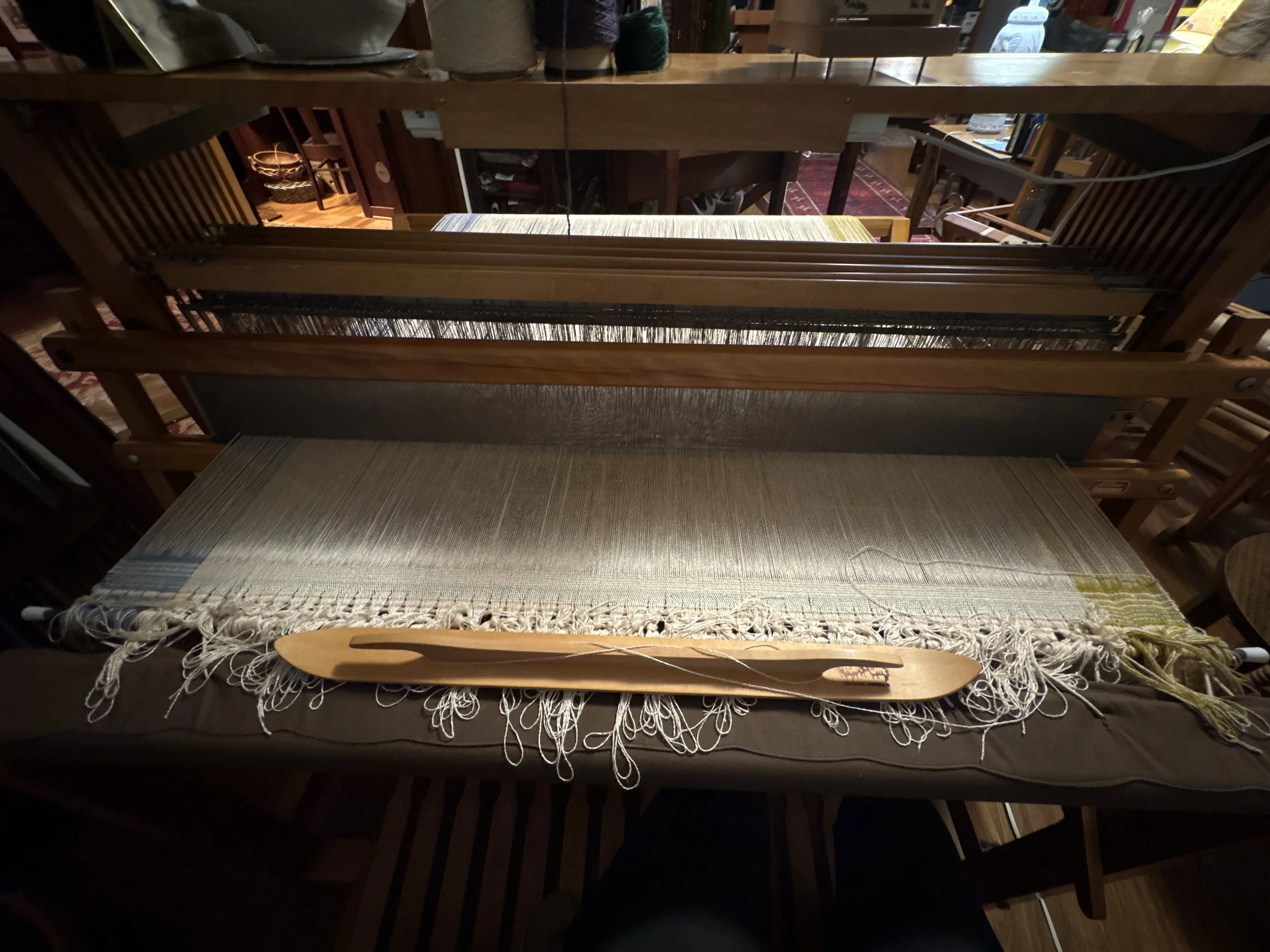
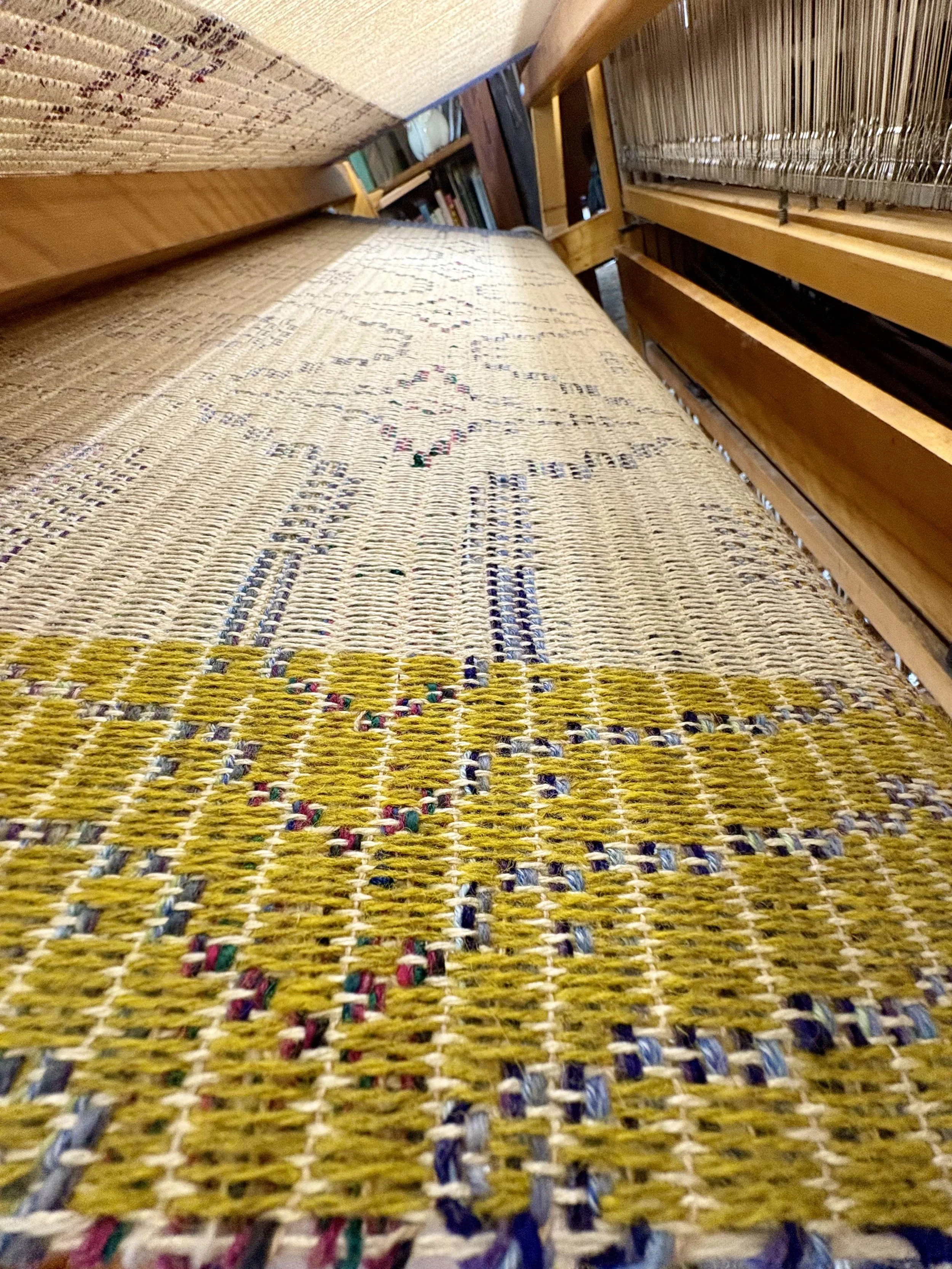
Initially we imagined a traditional Summer and Winter palette—white and green. But as we continued designing using “pixeLoom,” the composition began asking for something more. Powder blue and saffron yellow emerged along the left and right borders of the coverlet, framing the snowballs, rings, and pine trees with unexpected warmth.
One night, as I slept, a new idea took root.
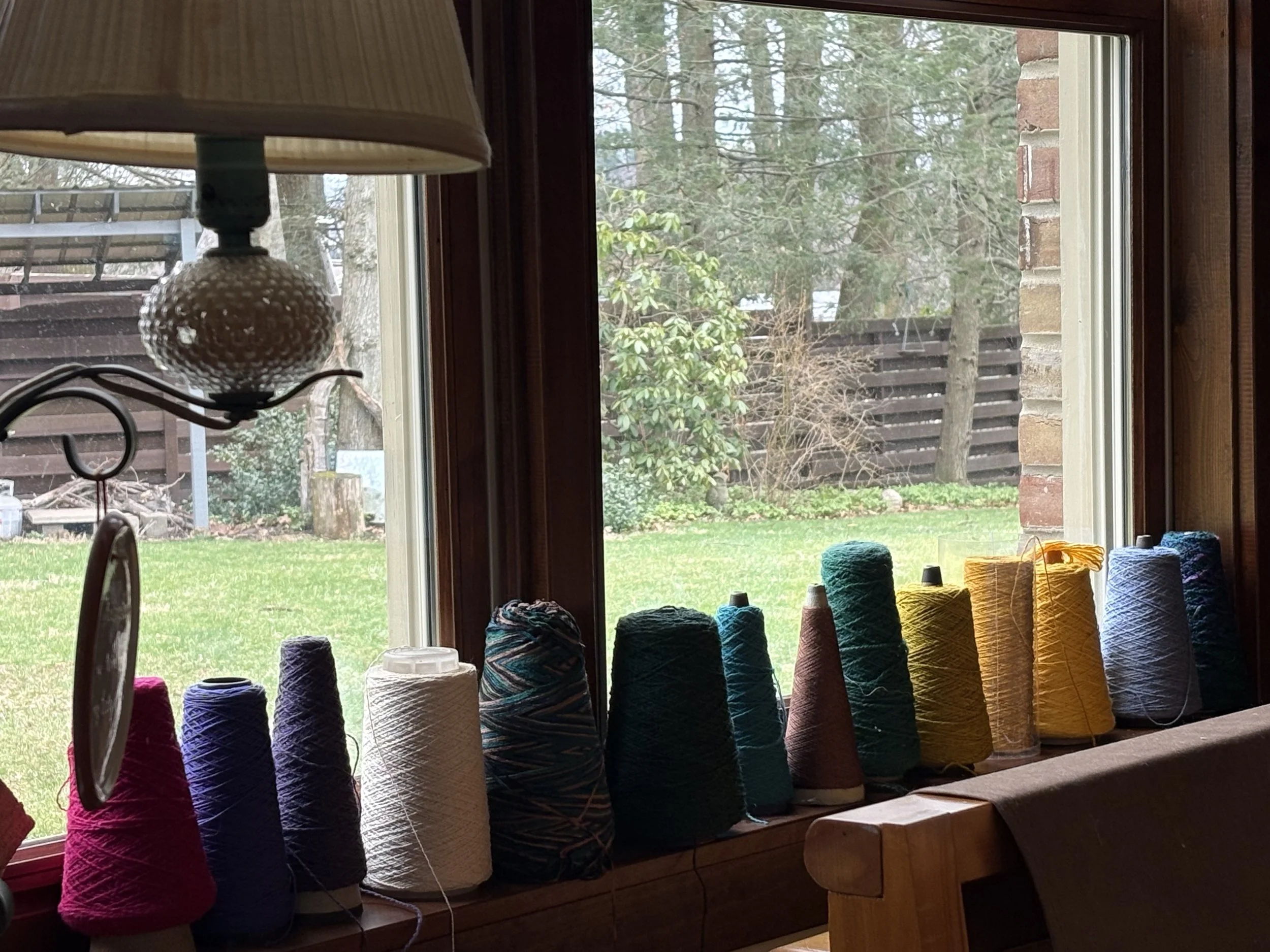
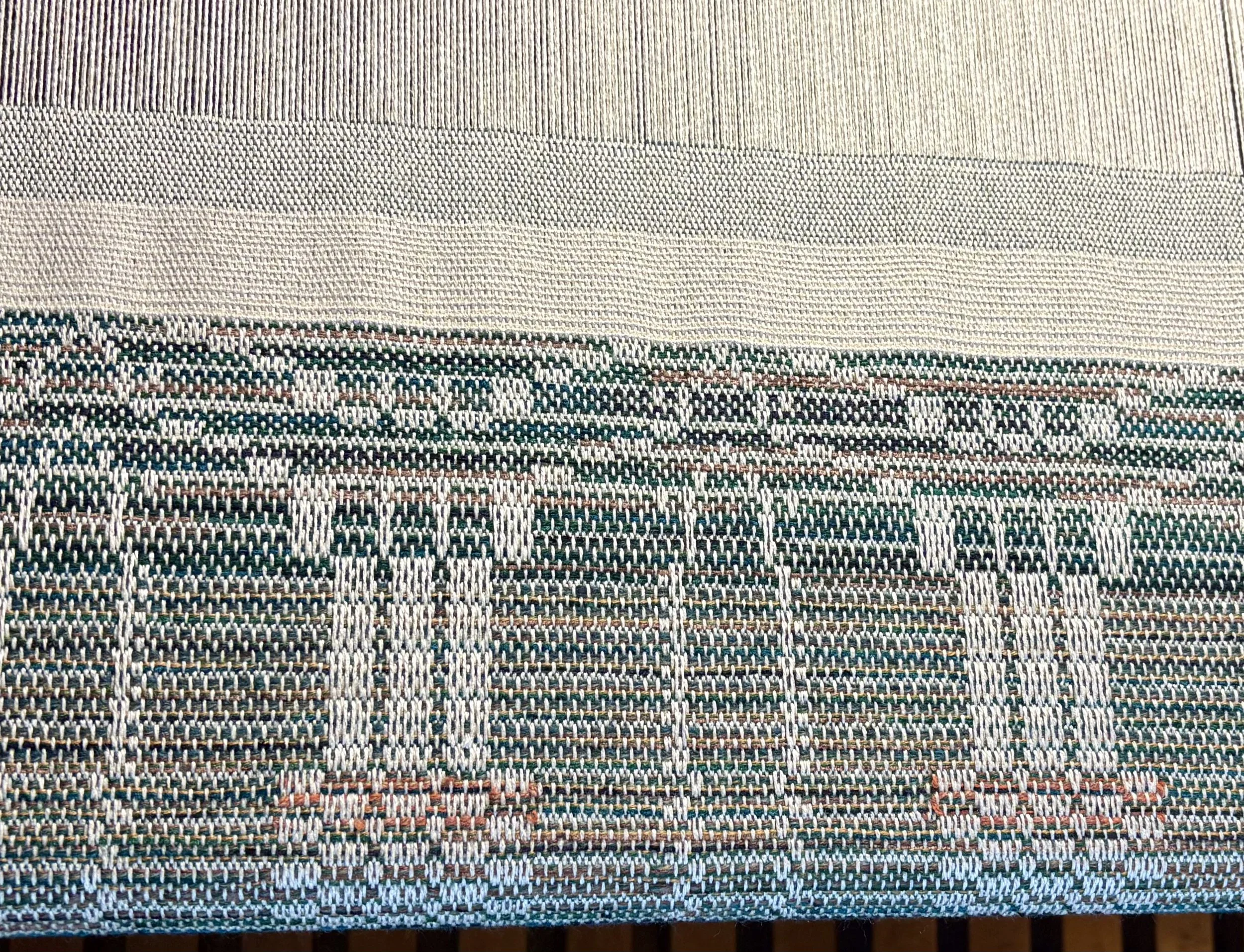
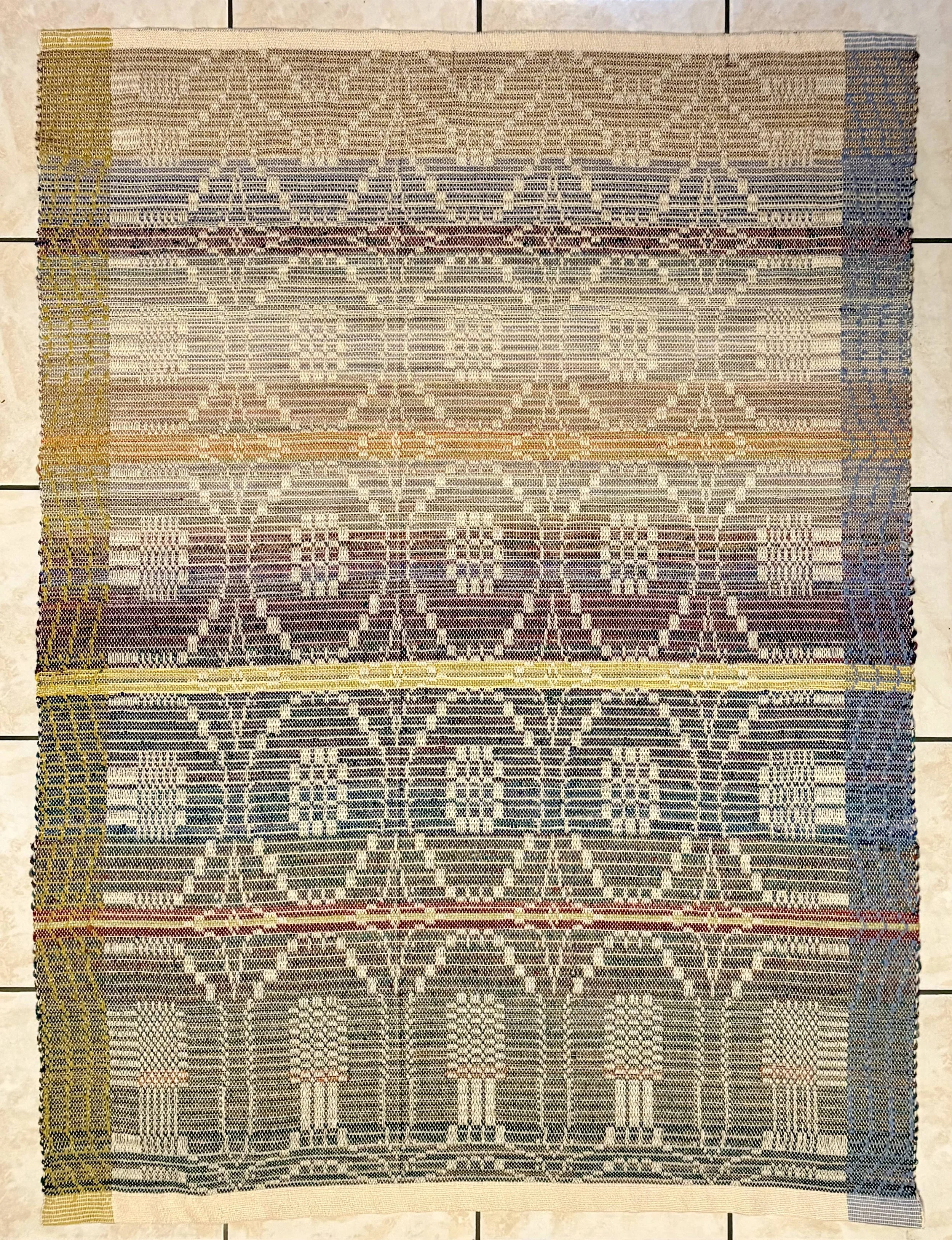
My studio is filled with vibrant fibers—many generously given by my dear friend and weaving mentor, Marcia—and I realized I wanted to weave with all of them. Each section of the coverlet would become a harmonious blend of colors: the top would evoke the sky, the bottom the trees. As my shuttles flew, I imagined myself as a gardener, sowing threads like seeds that would bloom into a field of wildflowers across the cloth.
Weaving is a slow art, and eventually I found my rhythm. I threw four shuttles, each carrying a different color as pattern weft, while a fifth shuttle carried the plain weft in a complementary shade. The Weaver’s Perfect Memory kept my place through many hours of weaving as I blended new colors into the weft. I imagined the centers of the stars as the hearts of blossoms and changed those colors to create bold contrast with the surrounding petals. When the pine trees began to emerge, I realized I wanted to see a touch of autumn descending, so I added a vibrant orange to contrast with the green.
While weaving, I often thought about our weavers of the 18th and 19th centuries whose work inspired this project. Their technical mastery and creativity are inspiring. Many of them wove narrow panels that had to be perfectly matched when sewn together into a single coverlet. The more I worked, the deeper my admiration grew.
My own coverlet, like a field of wildflowers, could never be duplicated.
Once off the loom, washed, blocked, and dried, the finished piece measures 42” × 60”. The design contains 43 motifs, each representing one year of our marriage. Two motifs in the corners stand for the two years Alan and I spent courting before we married.
Sometimes symbolism arrives quietly during the making.
In many ways, this coverlet feels like a conversation across generations. The weavers of the 18th and 19th centuries left us their knowledge in threads, drafts, and cloth, and today we continue that tradition—learning, adapting, and creating in our own studios. I am grateful for the teachers, guild members, and friends who share this journey, and for the quiet joy that weaving brings to our hands and our lives.
On March 12, 2026—our anniversary—I surprised Alan with this card of the finished coverlet that told our story.
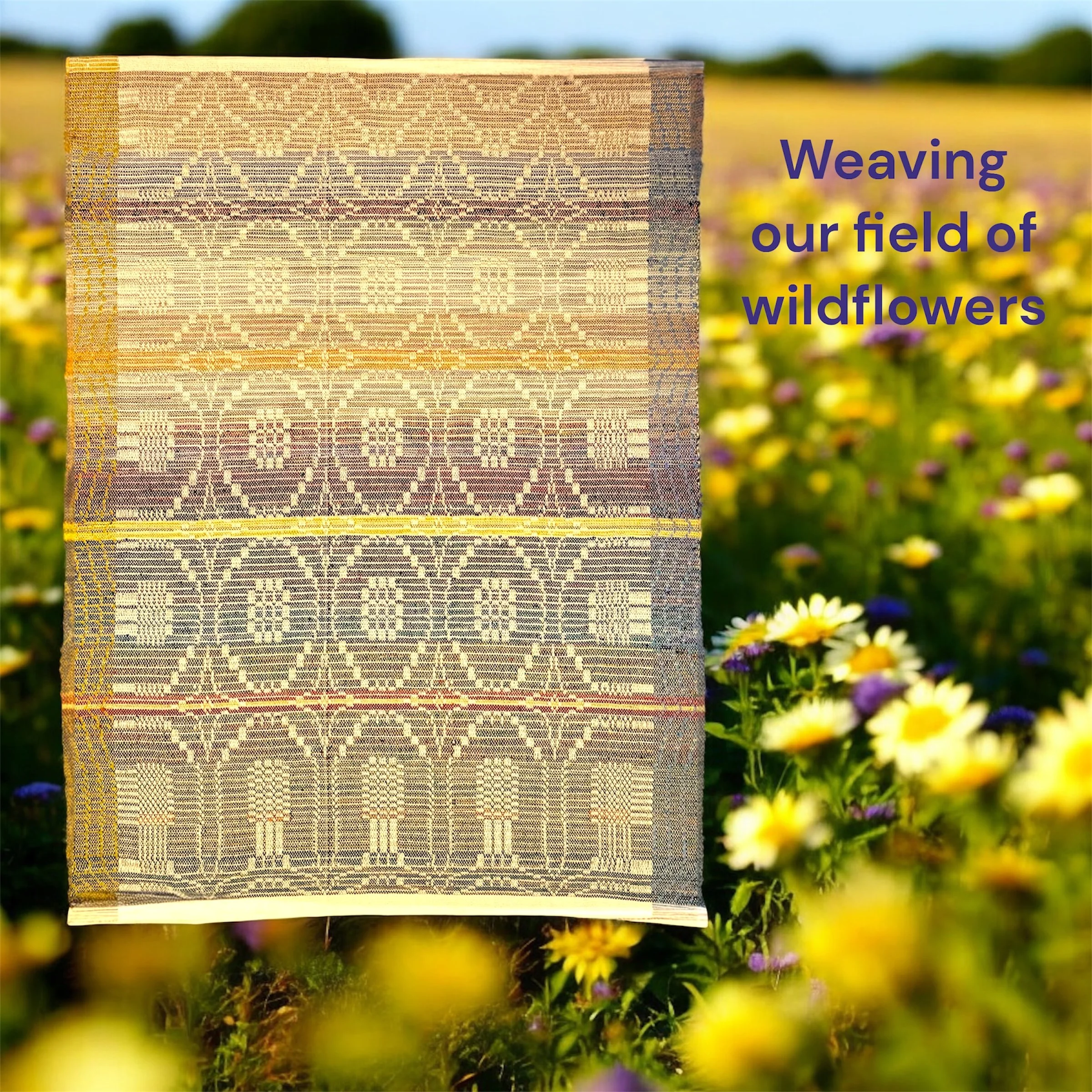
Forty-three years wrapped around us, woven with love.